
Introduction
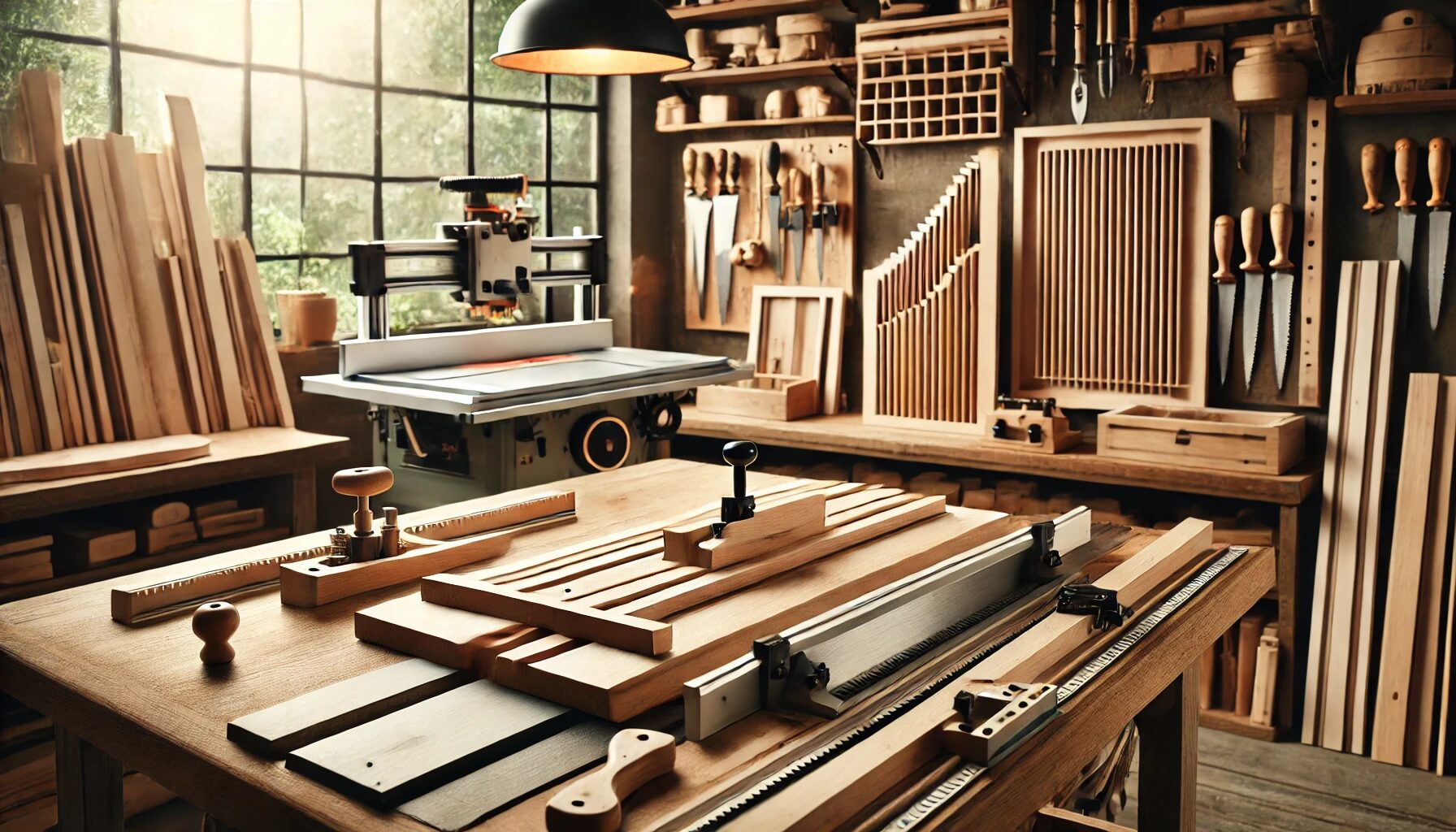
If you want to take your woodworking to the next level, jigs are a must-have. Whether you’re making repeatable cuts, improving precision, or boosting safety, woodworking jigs can make all the difference. In this guide, we’ll cover why jigs are essential and introduce you to the best DIY woodworking jigs that will improve your workflow.
1. What Are Woodworking Jigs and Why Do You Need Them?
A woodworking jig is a simple tool or fixture that helps guide your cuts, holds materials securely, and increases accuracy. Many tasks in woodworking require repetitive or precise movements, and without a jig, mistakes can happen easily.
Benefits of Using Jigs in Woodworking
- Improved Accuracy – Jigs help ensure consistent and precise cuts.
- Increased Safety – They keep your hands away from saw blades and moving parts.
- Faster Workflow – Jigs reduce setup time and make repetitive tasks easier.
- Better Quality Joints – Many jigs assist in joinery, ensuring tight and square connections.
2. Essential DIY Jigs for Every Workshop
1. Crosscut Sled
A crosscut sled is one of the most valuable jigs for any woodworker. It allows for precise 90-degree cuts with a table saw, ensuring accuracy and safety.
- Why You Need It: A crosscut sled reduces tear-out and ensures square cuts every time.
- DIY Option: You can build a crosscut sled using Baltic birch plywood and T-track rails.
2. Featherboard
A featherboard holds your workpiece securely against the fence, preventing kickback and improving cut quality.
- Why You Need It: Keeps your workpiece stable, improving control and precision.
- DIY Option: A featherboard can be made from hardwood with angled cuts to apply consistent pressure.
3. Dowel Jig
A dowel jig is used for making strong and precise dowel joints, which are commonly used in furniture making.
- Why You Need It: Helps align and drill perfectly positioned dowel holes.
- DIY Option: A simple dowel jig can be made using a scrap wood guide with pre-drilled holes.
4. Router Circle Jig
If you need to cut perfect circles, a router circle jig is an essential addition to your workshop.
- Why You Need It: Allows you to cut circles accurately without needing a bandsaw.
- DIY Option: A router base with an adjustable pivot point can easily turn your router into a circle-cutting tool.
5. Box Joint Jig
A box joint jig makes it easier to create interlocking finger joints, which are great for making drawers and boxes.
- Why You Need It: Ensures precise and repeatable cuts for stronger joints.
- DIY Option: A simple jig with a fixed indexing system can be built using a dado blade and a plywood sled.
3. How to Build Your Own Woodworking Jigs
Most woodworking jigs can be built with scrap plywood, hardwood, and simple hardware. When making your own jigs, consider:
- Using high-quality materials – Plywood and MDF work well because they resist warping.
- Adding adjustable components – T-tracks, knobs, and fences improve versatility.
- Testing your jig before use – Always make test cuts to check alignment and functionality.
4. Where to Buy Ready-Made Woodworking Jigs
If you don’t want to build your own, many high-quality jigs are available online and in woodworking stores.
- Amazon – Carries a variety of woodworking jigs, including Incra, Kreg, and Rockler brands.
- Rockler Woodworking – Specializes in precision jigs for routers, table saws, and drill presses.
- Woodcraft – Offers premium-quality jigs and guides for advanced woodworking techniques.
Conclusion
Woodworking jigs are essential tools for any workshop, whether you’re a beginner or an experienced craftsman. They help improve accuracy, safety, and efficiency, making woodworking more enjoyable and professional. By building or buying the right jigs, you’ll take your projects to the next level with cleaner cuts, tighter joints, and a smoother workflow.
Want to build your own jigs? Check out our DIY woodworking jig plans and tutorials!