
Introduction
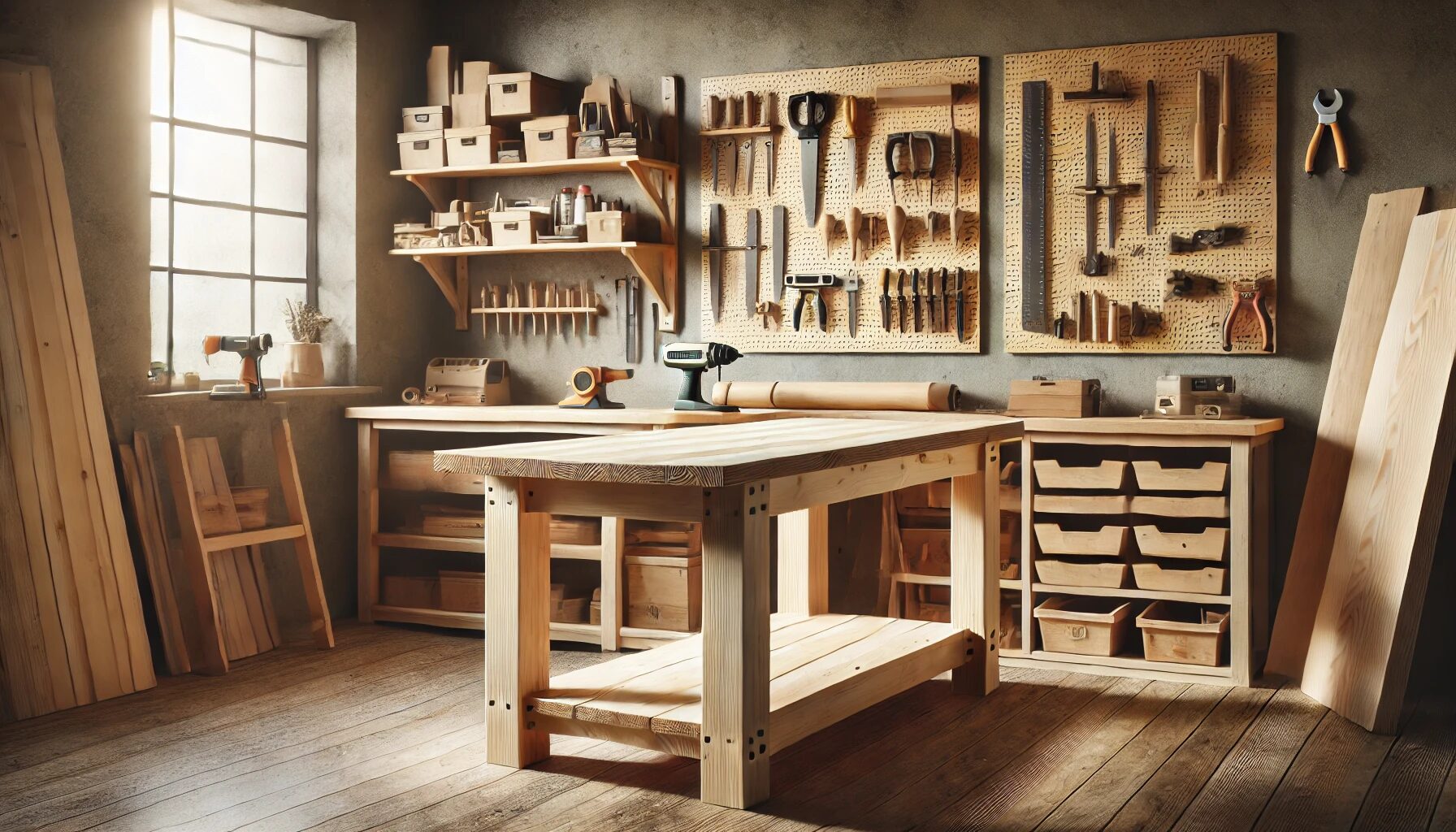
A DIY woodworking workbench is an essential part of any workshop. Whether you’re a beginner or an experienced woodworker, having a solid workbench improves precision, efficiency, and organization. In this guide, we’ll walk you through how to build a functional and sturdy workbench, including materials, tools, and step-by-step assembly.
1. Why You Need a Sturdy Workbench
A well-built workbench provides:
- A stable surface for cutting, assembling, and finishing projects.
- Storage options to keep tools and materials organized.
- Improved precision when working with hand tools or power tools.
- A safer workspace, preventing workpieces from shifting during cuts.
Best Materials for a DIY Workbench
Choosing the right materials ensures durability and stability. The best options include:
- Plywood (¾” thick / 19mm) – Affordable and easy to work with.
- Hardwood (Maple, Oak, or Beech) – Ideal for heavy-duty benches.
- 2×4 or 4×4 lumber (38x89mm or 89x89mm) – Provides a strong base structure.
- MDF or Particle Board – Budget-friendly options for the work surface.
2. Tools and Materials Needed
Tools Required
- Circular Saw (DeWalt DWE575SB) – For cutting wood to size.
- Drill and Driver Set (Makita XFD131) – For assembling frame and securing screws.
- Clamps (Bessey GSCC2.518) – To hold pieces together securely.
- Measuring Tape (Stanley 25’ PowerLock / 7.5m) – Ensures accurate dimensions.
- Square and Level – Essential for making precise cuts.
Materials List
- Four 4×4 posts (89x89mm) (legs)
- Eight 2×4 boards (38x89mm) (frame and support)
- ¾-inch (19mm) plywood sheet (work surface)
- Wood screws (3-inch / 76mm and 1.5-inch / 38mm)
- Wood glue (for added strength)
- Optional: Casters for mobility
3. Step-by-Step Workbench Construction
Step 1: Cut the Lumber
Using a circular saw or table saw, cut your wood to the following sizes:
- Workbench legs: (4) 4×4 posts, 32” (813mm) long
- Top frame pieces: (4) 2×4 boards, 48” (1219mm) long
- Side braces: (4) 2×4 boards, 22” (559mm) long
- Bottom shelf supports: (2) 2×4 boards, 46” (1168mm) long
- Work surface: (1) ¾-inch (19mm) plywood sheet, 48”x24” (1219mm x 610mm)
Step 2: Assemble the Workbench Frame
- Arrange the 4×4 legs in pairs.
- Attach the 48” (1219mm) long 2x4s to connect the legs, forming the top frame.
- Use wood glue and 3-inch (76mm) wood screws to secure the joints.
- Attach side braces (22” / 559mm 2x4s) for added stability.
- Ensure everything is square and level before tightening screws.
Step 3: Attach the Work Surface
- Lay the ¾-inch (19mm) plywood on top of the assembled frame.
- Secure it using 1.5-inch (38mm) wood screws, spaced every 6 inches (152mm).
- Sand the edges to smooth out any rough areas.
Step 4: Add a Bottom Shelf (Optional)
- Place the bottom shelf supports (46” / 1168mm 2x4s) between the legs.
- Secure a ¾-inch (19mm) plywood shelf to store tools and materials.
Step 5: Customize Your Workbench
- Add a vise for better clamping options.
- Drill holes for bench dogs if you plan to use hand tools.
- Attach casters for mobility in small workshops.
- Install pegboard or drawers for additional storage.
4. Tips for Building a Long-Lasting Workbench
- Use hardwood if you want a heavy-duty workbench that lasts decades.
- Seal or varnish the top to protect against spills and stains.
- Make sure the workbench is level to prevent wobbling.
- Avoid nails – screws and wood glue provide a stronger connection.
5. Where to Buy Quality Materials for Your Workbench
- Home Depot – Lumber for Workbenchesfor US woodworkers, if you reside in other countries you can go on Google Maps and search for example Lumber store near me, or Woodworking near me.
- Rockler – Best Workbench Accessories
- Fine Woodworking – Workbench Guide
Conclusion
Building a DIY woodworking workbench is an excellent first project that improves your shop’s efficiency and organization. With a solid frame, durable work surface, and storage options, you’ll have a reliable space to tackle any woodworking task. Whether you’re a beginner or an expert, having a custom-built workbench makes woodworking more enjoyable and precise.
Want more project ideas? Check out our step-by-step woodworking plans and tool recommendations!